STYL’ONE User Group 2026: Advancing Tableting Development Through Science, Innovation, and Collaboration
Bringing the Community Together
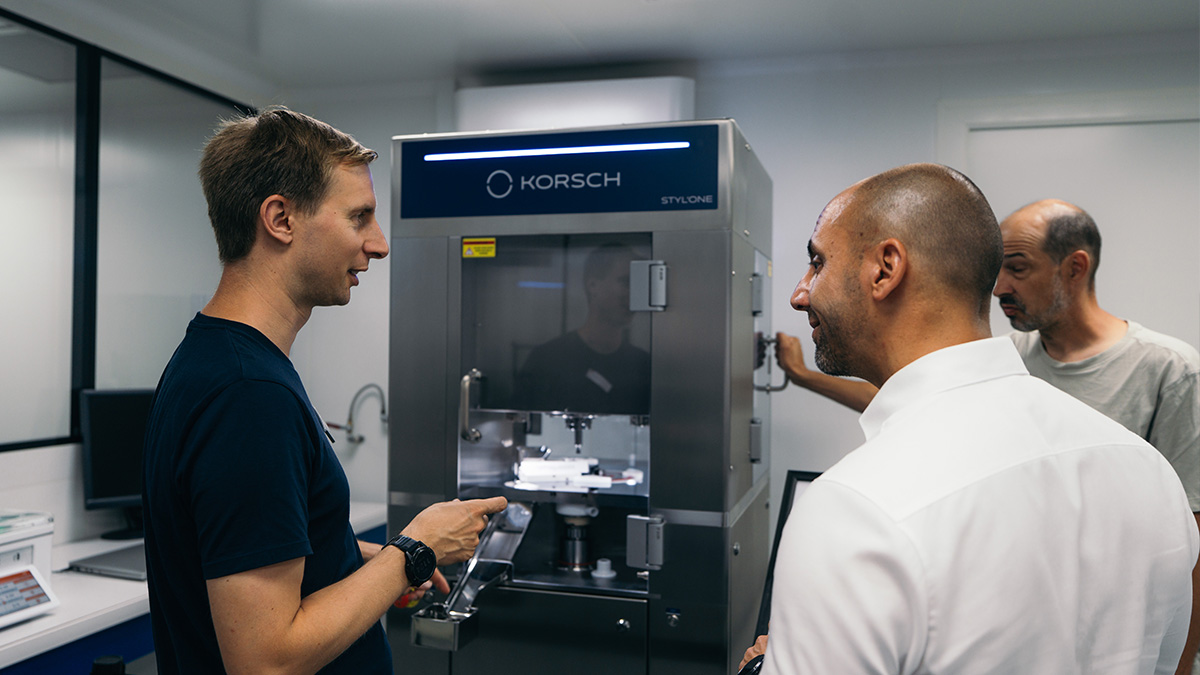
Over three days in June, tableting scientists, formulation specialists, manufacturing experts, academic researchers, CDMOs, excipient suppliers, and equipment providers gathered in Beynost, France, for the 6th STYL’ONE User Group. The event provided a unique opportunity to share experiences, discuss emerging challenges, and explore innovative approaches to oral solid dosage development.
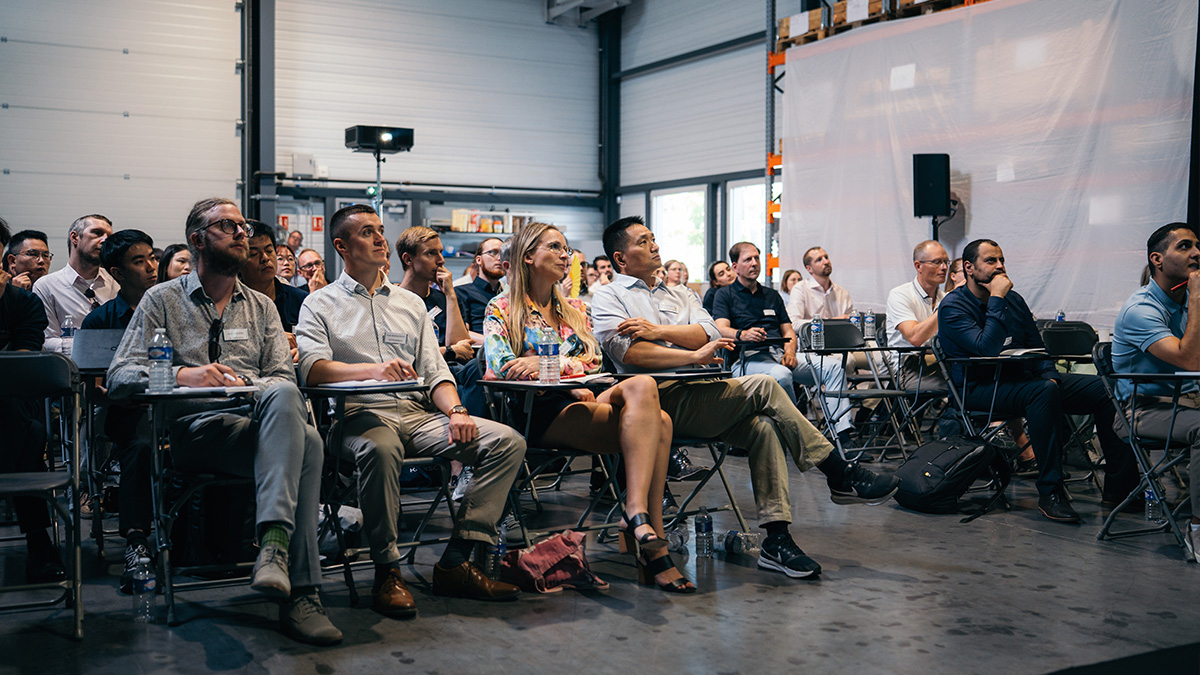
The conference highlighted how compaction simulation, advanced material characterization, automation, and data-driven methodologies are helping accelerate development while reducing scale-up and manufacturing risks. Through technical presentations, discussions, and knowledge sharing, participants explored new approaches to advancing tablet development and manufacturing.
Understanding Materials to Improve Process Performance
One of the strongest themes throughout the event was the growing importance of understanding material attributes and their impact on downstream manufacturing performance.
Several presentations explored how powder properties influence flowability, compactability, tablet strength, and final product quality, including tablet dissolution behavior. Researchers from Catalent, Ayat Aboelela, demonstrated how advanced powder characterization, multivariate analysis, and compaction modelling can support formulation transfer and drug-load expansion of spray-dried APIs. Roche, Lasse Blaabjerg, highlighted the importance of characterizing novel excipients such as salcaprozate sodium (SNAC) to better understand manufacturability constraints and develop successful dry granulation processes that overcome the limitations of direct compression.
Similarly, XEDEV, Lise Vandevivere, and the University of Iowa, Tze Ning Hiew, focused on amorphous solid dispersions (ASDs), illustrating how material properties, tablet structure, and physical attributes such as solid fraction, together with compression parameters and downstream processing routes, can collectively influence manufacturing behavior and drug release performance.
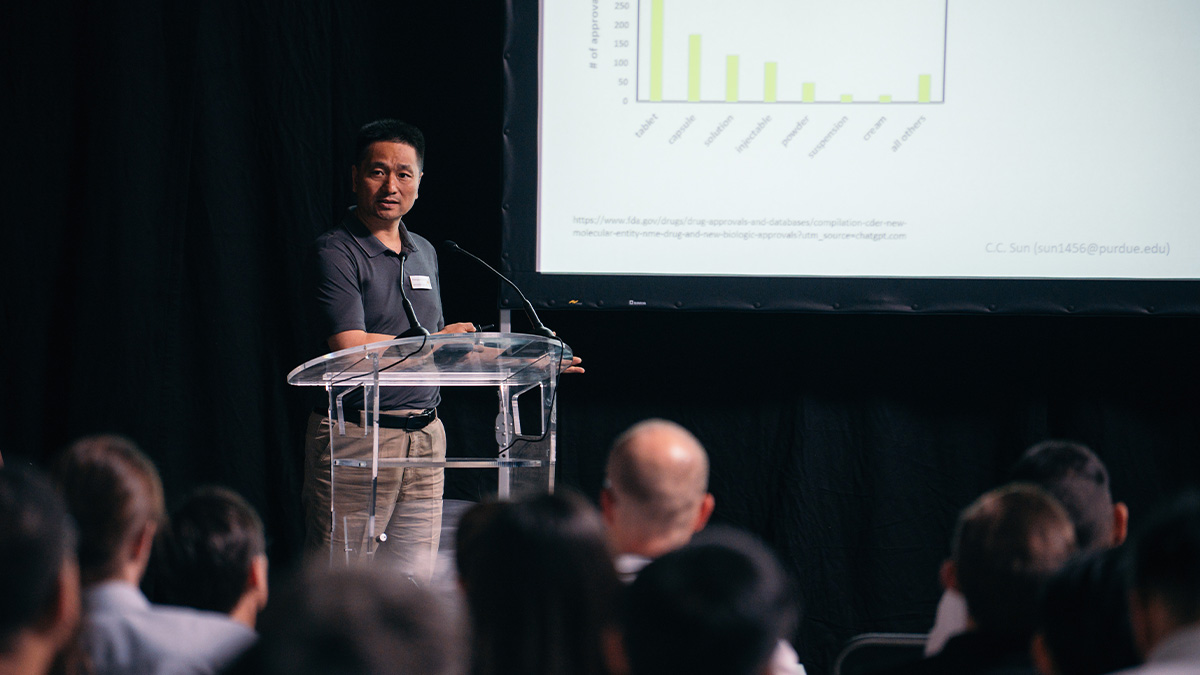
Prof. Calvin Sun from the Purdue University further demonstrated how advances in tabletability modelling and compaction simulation are enabling digital tablet design, allowing formulators to predict blend performance and virtually screen formulation candidates before experimental testing.
Together, these studies reinforced the industry’s shift toward a more mechanistic understanding of pharmaceutical materials, enabling smarter process design, more efficient development, and more predictable manufacturing outcomes.
Managing Increasingly Complex Dosage Forms
As oral drug products become more sophisticated, formulators are facing new challenges that require innovative tablet architectures and manufacturing strategies.
Thermo Fisher Scientific, Geoffrey Bosco, presented the development of a tri-layer tablet designed to overcome compatibility issues between an API and a functional excipient intended to improve drug absorption. By physically separating the two components within the tablet, the team successfully combined functionality with stability.
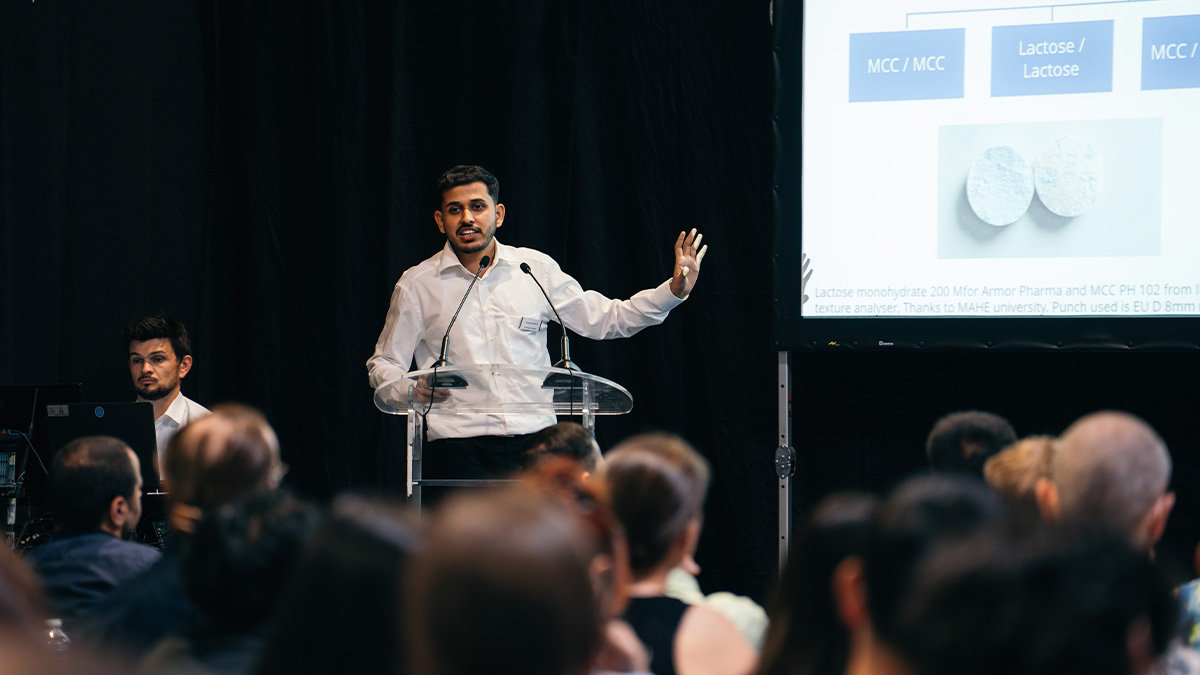
Other presentations focused on multi-layer tablets, mini-tabs, and MUPS (Multiple Unit Pellet System) formulations. KORSCH researchers, Krishna Kishor, Dr. James Stephens, and Dr. Friederike Gütter, demonstrated how compaction simulation can support the development of these advanced dosage forms. Their work showed how simulation can be used to predict interlayer bonding performance, reduce the risk of delamination and capping through tamping force optimization, dwell time studies, and elastic recovery measurements, and improve mini-tab manufacturability through die-filling investigations.
The research also explored pellet coating integrity during compression, a key factor in maintaining targeted drug-release characteristics. Complementing this work, BASF, Nils Rottmann, investigated the influence of pellet coating composition on MUPS robustness. The study demonstrated that both the type and concentration of plasticizer significantly affect coating elasticity, pellet integrity during compression, and ultimately drug-release performance, highlighting the importance of coating design in achieving robust pellet-based dosage forms.
These studies illustrated the increasing need to combine formulation science with detailed process understanding when developing advanced oral dosage forms.
From Development to Scale-Up
Bridging the gap between laboratory experiments and commercial manufacturing remains a critical challenge throughout pharmaceutical development.
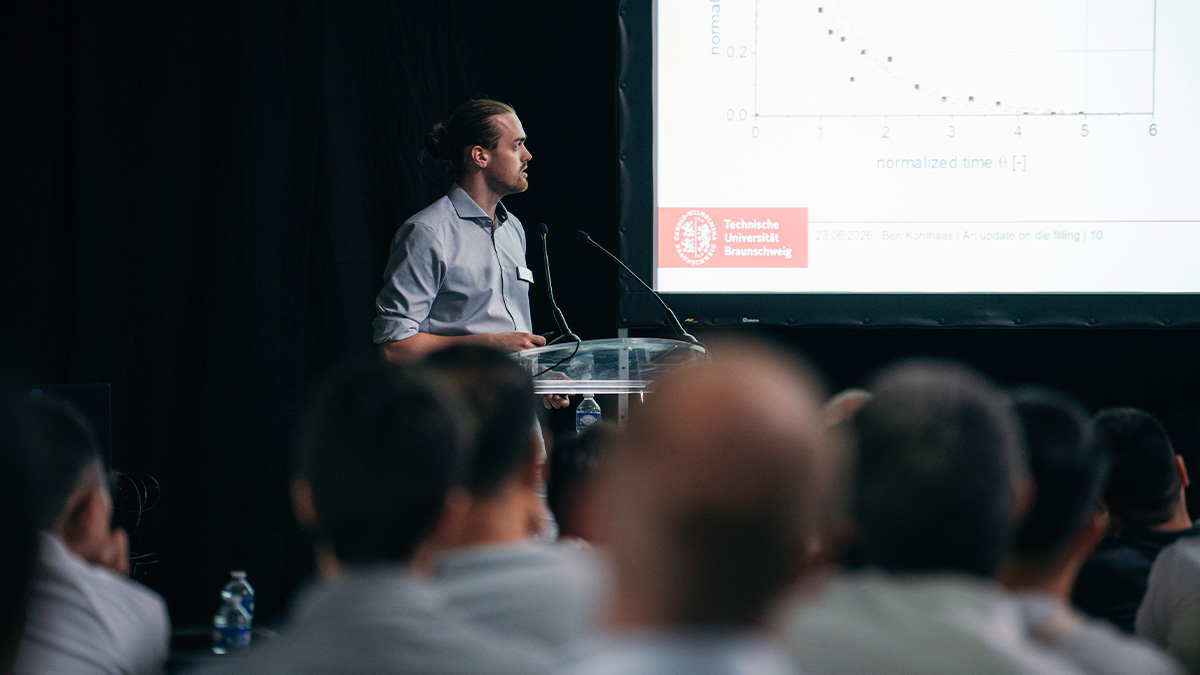
Several speakers demonstrated how the STYL’ONE Evo Compaction Simulator can support more robust scale-up strategies. Researchers from the Technical University of Braunschweig, Ben Kohlhaas, investigated die-filling mechanisms and feed-frame behavior to improve the translation of development studies to rotary presses.
KORSCH, Michelle Rein, illustrated a single-step scale-up strategy using the STYL’ONE Evo to define formulation and process design spaces before transferring optimized parameters directly to a high-speed rotary press. A three-layer tablet case study demonstrated how compaction simulation can significantly reduce material consumption, shorten development time, and minimize scale-up risks while ensuring compliance with target product specifications.
Johnson & Johnson, Jolien Aerts, explored the transfer of formulations between continuous and batch manufacturing processes. Using compaction simulation, the team identified differences in lubrication and blending conditions as a key source of variation in tabletability and compactability, highlighting the importance of understanding process-induced material changes during technology transfer.
L.B. Bohle, Robin Meier, demonstrated how combining continuous wet granulation with compaction simulation enables material-sparing formulation development and efficient scale-up using only small quantities of material.
Meanwhile, Eli Lilly, Peyman Animpour, presented a simulation-guided approach involving filler selection, densification, and surface modification that successfully transformed a poorly flowing API into a robust roller-compaction formulation suitable for commercial manufacturing.
Orion, Oliver Degerstedt, also highlighted the challenges of developing a universal placebo formulation that performs consistently across tablet sizes and manufacturing platforms. The study emphasized the importance of balancing flow properties, tabletability, and coating performance with mechanical robustness.
Across all presentations, the message was clear: understanding the relationship between material properties and process conditions is essential for successful scale-up technology transfer, and reliable commerical manufacturing.
Optimizing Manufacturing Performance
A number of presentations focused on practical manufacturing challenges that directly impact productivity and product quality.
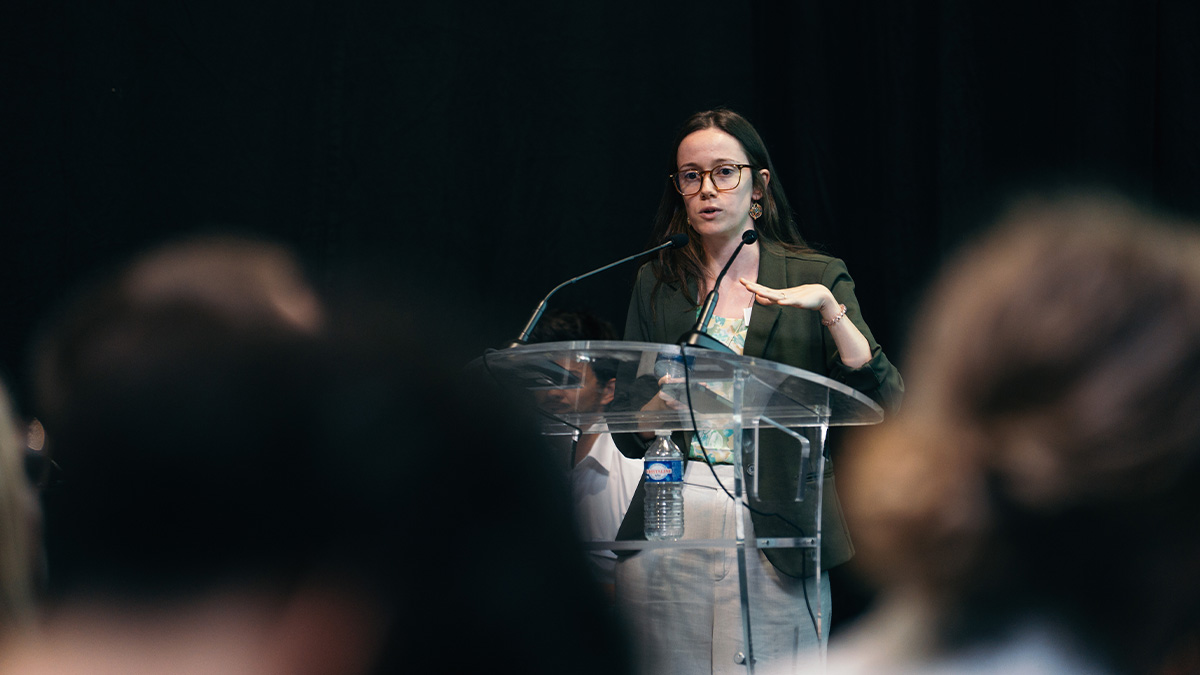
Topics included lubrication strategies, feeder optimization, compression speed control, compression speed and loading, and tablet sticking mitigation. Ardena, Laure Descamps, explored alternative lubrication approaches, both internal and external, designed to reduce negative effects on tablet properties. Hovione, Madalena Guedes, presented practical guidelines for optimizing feeder selection and operating conditions on the STYL’ONE Nano Benchtop R&D Tablet Press when material availability is limited.
Meiji, Keigo Hanyuu, showcased an innovative compression-speed control strategy capable of maintaining tablet strength while increasing throughput. I Holland, Vishal Shinde, discussed ongoing efforts to predict dwell-time sensitivity and mitigate sticking through optimized extended-head punch designs. MEDELPHARM, Bruno Leclercq, presented the Heated Die accessory for the STYL’ONE Evo Compaction Simulator as the tool for predicting temperature-related manufacturing challenges, including sticking, porosity, and dissolution performance. The work highlighted how compression temperature can affect tablet quality and why it should be considered early in development and scale-up.
Prof. Vincent Mazel from the University of Bordeaux and researchers from Johnson & Johnson, Jolien Aerts, further investigated the mechanisms leading to tablet lamination. Their work demonstrated that air entrapment during compression is strongly influenced by process parameters such as loading speed, relaxation time, and ejection conditions, factors that can often be overlooked during press transfer.

These studies highlighted how seemingly small process adjustments can have a significant impact on manufacturing efficiency, product quality, and process robustness.
The Growing Role of Digitalization and Predictive Development
Another key takeaway from the 2026 STYL’ONE User Group was the growing integration of digital technologies into pharmaceutical development.
Elegent, Michael Ghijs, presented a machine-learning framework capable of predicting critical tablet quality attributes using material, formulation, and process data. By enabling virtual formulation screening, the approach has the potential to significantly reduce experimental workload and accelerate development programs.
Researchers from CMAC at the University of Strathclyde, Mingrui Ma, demonstrated how automation and advanced analytics can be combined with compaction simulation to rapidly predict tablet disintegration and dissolution performance. Their integrated workflow combines robotic tablet production, automated testing, and high-throughput data analysis to support faster and more informed formulation decisions.

These examples reflect a broader industry movement toward predictive, data-driven development environments, where experimentation, modelling, and automation work hand in hand to accelerate development and improve decision-making.
Key Takeaways from the 6th STYL’ONE User Group
Several major trends emerged throughout the three-day event:
- Material characterization remains fundamental to successful formulation and process development.
- Advanced dosage forms continue to drive innovation in oral drug delivery.
- Compaction simulation has evolved into a strategic decision-making platform supporting formulation design, process optimization, and scale-up.
- Automation, machine learning, and advanced analytics are becoming essential components of modern pharmaceutical development.
- Process understanding is becoming as important as formulation design.
- Robust scale-up and manufacturability remain central priorities across the industry.
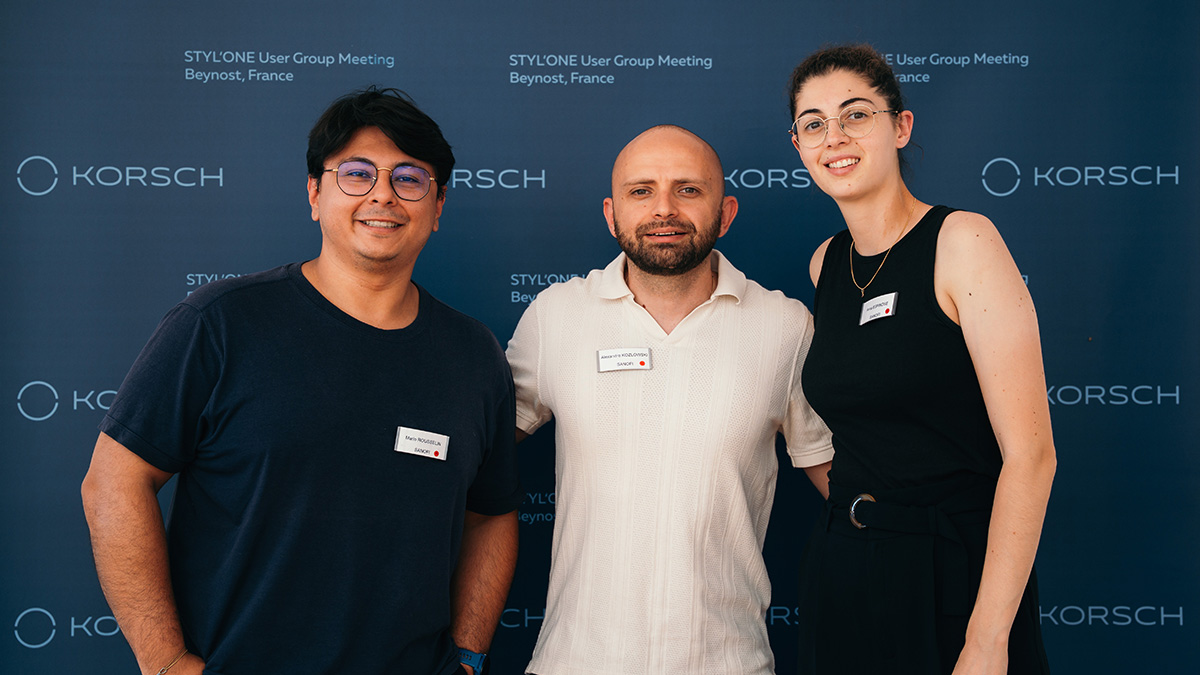
Conclusion
The STYL’ONE User Group 2026 once again demonstrated the value of bringing together scientists, formulators, researchers, manufacturers, and technology experts to exchange knowledge, share experiences, and advance pharmaceutical development. The insights shared during the event reflected not only the current state of tablet development, but also the future direction of the industry.
Across presentations covering powder characterization, advanced dosage forms, scale-up methodologies, digital technologies, and manufacturing optimization, a common message emerged: future success will increasingly depend on the ability to transform data-driven scientific understanding into predictive, connected, and robust development strategies.
On behalf of the entire KORSCH Team, we would like to thank all speakers, attendees, partners, and contributors who made the 6th STYL’ONE User Group such a successful event. We look forward to continuing these conversations and welcoming the tableting community back to Beynost for the next edition of the STYL’ONE User Group.