Containment and Continuous Production
Opportunities, challenges, and practical experiences
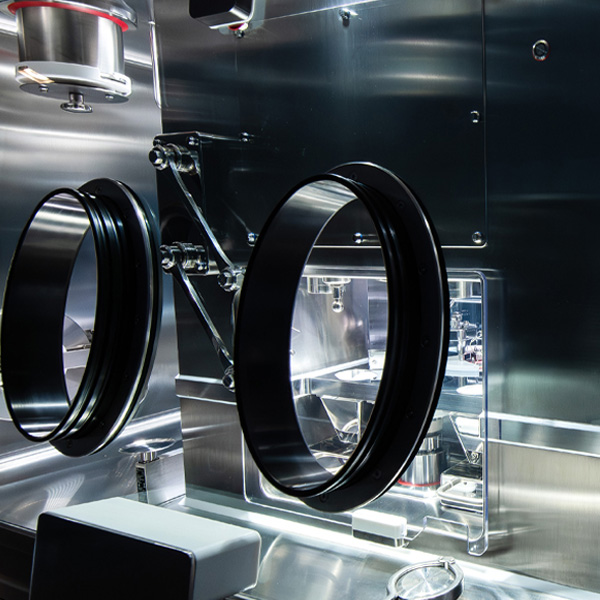
Continuous manufacturing is considered efficient, but involves more interfaces, making containment more challenging. But what happens when the two come together? A look at practical applications reveals the opportunities offered by continuous manufacturing under high-containment conditions and where the challenges lie.
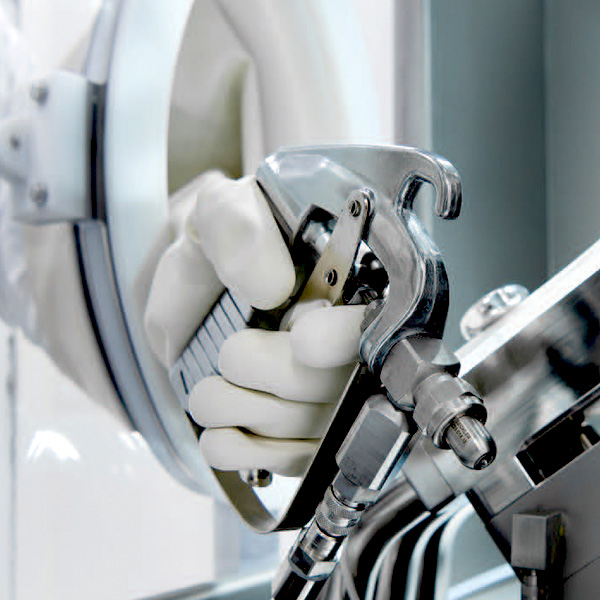
The combination of continuous manufacturing (CM) and containment technology is becoming increasingly important in the pharmaceutical industry, even when processing highly potent active pharmaceutical ingredients (HPAPIs).
Fewer interfaces – more safety?
In containment, interfaces are considered particularly critical. Continuous systems link several process steps together – from feeding to tablet coating. This holds advantages: “Linking the process steps in one line eliminates many ‚make-or-break‘ interfaces,” explains Andreas Teske, Project Manager at L.B. Bohle, a leading manufacturer of process and handling machines and a KORSCH partner for integrated manufacturing solutions for solid pharmaceuticals.
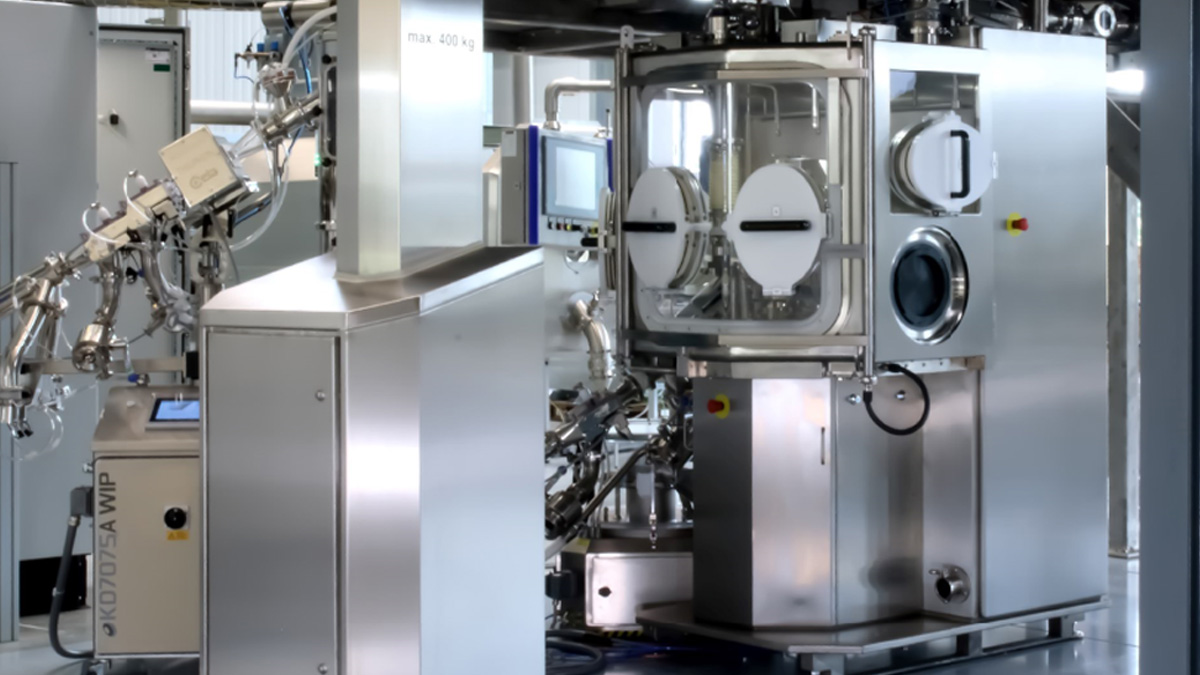
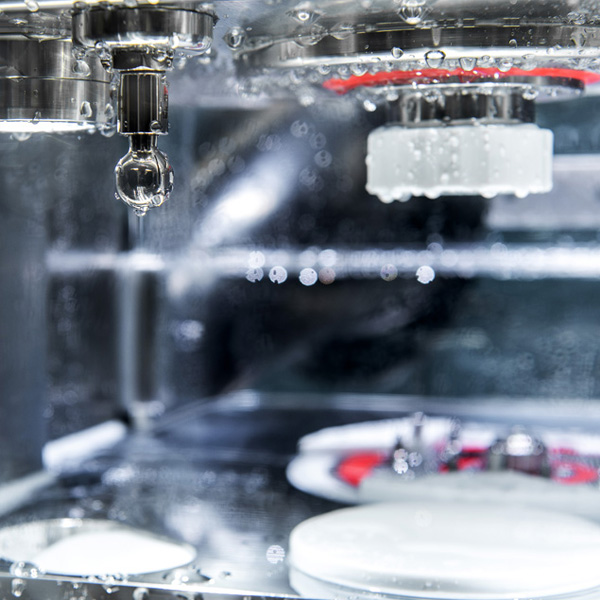
Another key topic is Wash-in-Place (WIP) cleaning in combination with both high containment and continuous production. Unlike in batch production, WIP cleaning is carried out sequentially in continuous processes using the top-down principle. Cleaning is no more complex, but more time-consuming. Cleaning intervals are defined based on risk; complete cleaning is required when changing products at the latest.
Requirements and advantages
All continuous processes – like direct compression, dry granulation and wet granulation – are capable of containment compatible with the requirements of OEB 4 and OEB 5 in principle. Ultimately, design is crucial – for example in feeding devices whose load cells can be affected by negative pressure, as Andreas Teske explains. The close coordination of process conditions and interfaces between connected plant components is vital here.
According to Teske, one fundamental advantage of continuous manufacturing is that it often requires a smaller equipment footprint than batch production. “Less product in motion often means less potentially contaminated surfaces – but this is highly product-dependent,” he adds. Interfaces remain a risk in continuous manufacturing, but are easier to control. Process analytics (PAT) facilitate live monitoring and can reduce the need for sampling, which is considered a containment risk. “Any leaks are limited to the respective process – in batch production, the entire batch can be affected if it comes to the worst,” he explains. Continuous monitoring of the product during production allows potential deviations – such as segregation – to be detected at an early stage and specifically compensated for. In addition, a scale-up, i.e. an increase in product output, can be achieved in continuous manufacturing plants simply by extending production times. This can significantly reduce development time from R&D to production.
Technically feasible, but a regulatory challenge
The transition from batch to continuous manufacturing takes time: Existing processes must be re-evaluated, interfaces adapted,
and personnel trained. In high containment in particular, training requirements for operators are higher, since many processes in continuous manufacturing plants are interlinked and require a deeper understanding of risks, interfaces, and hazard identification.
“Ultimately, however, it‘s all a question of finding a constructive solution,” says Andreas Teske.
From a regulatory perspective, batch processes are currently easier to approve, while continuous manufacturing facilities are subject to particular scrutiny by the authorities. Demand is growing nonetheless, not least due to the increasing relevance of highly effective APIs. Many companies are already investing in continuous manufacturing systems compliant with OEB levels 4 and 5. “The interest in continuous manufacturing exists – and it‘s an intensive path that we must walk together,”Teske summarizes.